How Dyno Nobel and ClimeCo Are Driving N2O Emissions Reduction At Scale

Working with ClimeCo’s team of emissions-reduction experts has been critical to the success of this project. Together, we’re demonstrating how nitric acid facilities can adopt proven abatement technologies at scale. This collaboration reinforces our commitment to innovation, operational excellence, and long-term climate impact.

Greg Hayne
President of Dyno Nobel Americas
Challenge:
The production of nitric acid, a key ingredient in fertilizers and commercial explosives, generates nitrous oxide (N2O) as a byproduct of the ammonia oxidation process. Because of its high climate impact, projects that permanently reduce N2O can deliver meaningful, measurable emissions reductions at scale. Dyno Nobel Inc., a leading commercial explosives manufacturer, wanted to reduce N2O emissions at its nitric acid production facility in Louisiana, Missouri, by installing N2O abatement technology, specifically a tertiary catalyst system. This technology delivers the greatest potential for reducing N2O emissions but can be particularly expensive, creating a barrier to widespread adoption.
Solution:
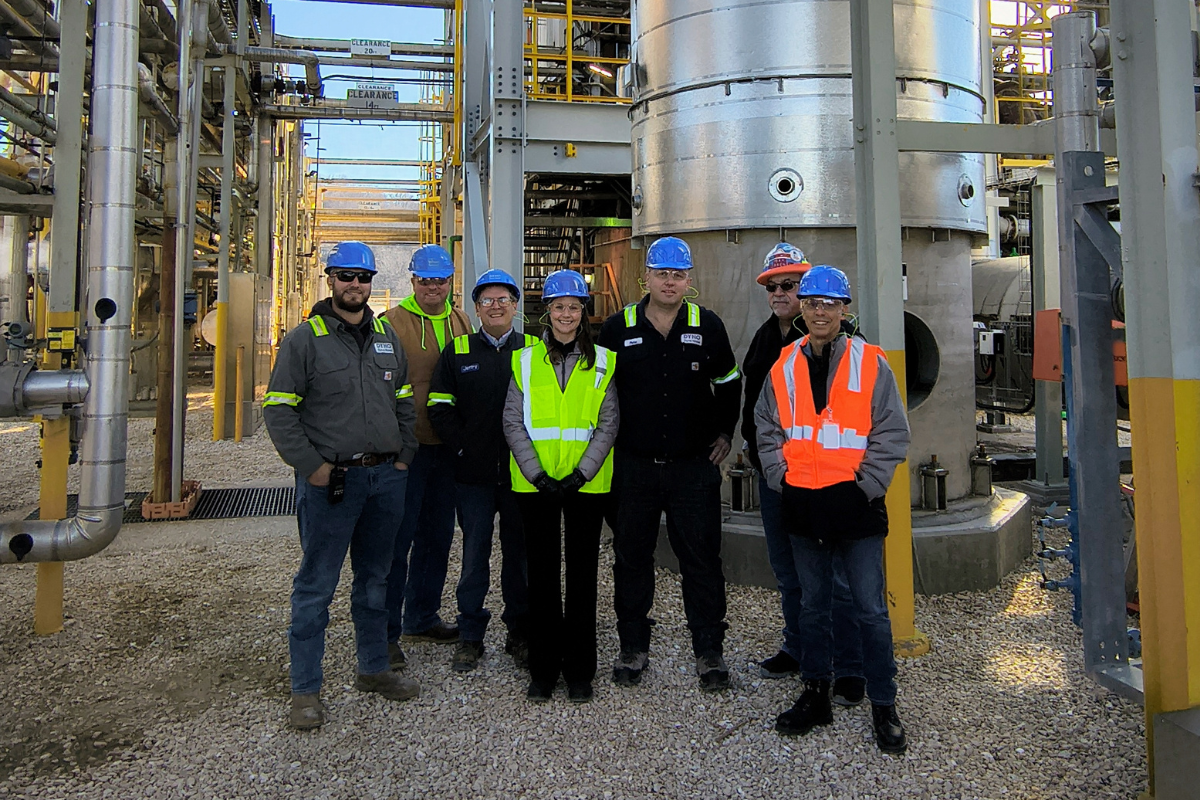
In 2024, Dyno Nobel, with technical support from ClimeCo, installed a tertiary abatement system at their Louisiana, Missouri nitric acid plant. The new system treats tail gas from the ammonia oxidation reactor to permanently break down N2O into harmless nitrogen and oxygen molecules.
ClimeCo, serving as the Project Developer, has partnered with Dyno Nobel to leverage the Voluntary Carbon Market (VCM) to help finance the installation and continued operation of the abatement system by generating and selling carbon credits. Emissions reductions are quantified from hourly N2O measurements taken before and after abatement. Operational data is processed by ClimeCo and verified by a third party to generate credits under the Climate Action Reserve’s Nitric Acid Production protocol. The project remains eligible to issue credits for up to 30 years.
The Climate Action Reserve’s protocol includes rigorous reporting standards, ensuring each credit represents a permanent, additional, and verifiable emissions reduction. At Dyno Nobel’s Louisiana, Missouri plant, operations staff, working with ClimeCo, meet this standard through regular instrument calibration, third-party accuracy checks, and routine site visits.
Results:
The installation of the abatement system, alongside the hard work of the Dyno Nobel team, has enabled the site to achieve over 99% abatement efficiency to date, meaning more than 99% of the N2O in the tail gas, which otherwise would have been vented to the atmosphere, is permanently destroyed. This translates to an expected reduction of 673,000 tCO2e annually, equivalent to taking 156,000 gas-powered cars off the road. [1] Additionally, the project supports cleaner air quality, ozone recovery, and healthier local communities.
While N2O emissions are not currently regulated in the United States, Dyno Nobel and ClimeCo’s partnership demonstrates how nitric acid plants can leverage available abatement technologies and the VCM to drive significant, financially viable climate impact.
Works Cited
[1] – Greenhouse Gas Equivalencies Calculator | US EPA
Let’s Start a Conversation
Book a meeting with us today to help champion your sustainability journey.